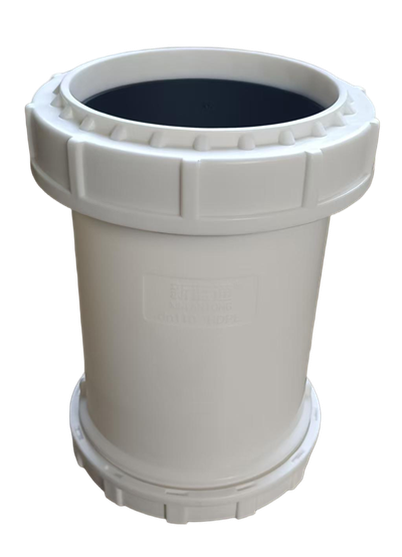
HDPE Water Trap Testing Process And Its Significance For Quality Control
Leave a message
As a key odor-proof component in building drainage systems, the reliability of HDPE water traps directly affects indoor environmental hygiene and safety. To ensure the product continues to effectively block harmful gases and pests throughout its service life, a scientific and rigorous testing process must be established to systematically verify material properties, structural dimensions, and functional performance.
The testing process typically begins with incoming raw material inspection. The melt index, density, and molecular weight distribution of high-density polyethylene resin must meet relevant standards to guarantee subsequent processing performance and the mechanical strength of the finished product. At this stage, sampling analysis is used to eliminate raw materials that do not meet technical specifications, controlling quality risks from the source.
After entering the production stage, first-piece inspection and process inspection constitute key control points. During extrusion molding, material temperature, die pressure, and traction speed must be monitored in real time to ensure uniform wall thickness and regular shape of the water trap blank. For key dimensions of U-shaped or P-shaped structures, such as bending radius, water seal height, and port diameter, sampling measurements should be performed using calipers, contour projectors, and other measuring tools to confirm conformity with design drawings and specifications. Before leaving the factory, finished products must undergo comprehensive performance testing. Static pressure testing is one of the core tests. The water trap is connected to the pipe in its installed state, a specified water pressure is applied and maintained for a certain period, and any leakage or deformation is observed to verify its pressure-bearing and sealing performance. The water seal retention test simulates evaporation or negative pressure conditions to determine whether the water seal height remains within the allowable range within a specified time, thus determining the stability of its odor-proof function. For chemical corrosion resistance, samples can be immersed in common acid and alkali solutions as needed to test for changes in quality and performance.
The testing process must be fully recorded, including testing conditions, data, and conclusions, and traceable. Non-conforming items should be isolated, identified, and their causes analyzed, and corrective and preventive measures should be developed before re-entering the testing or rework process.
Through systematic testing throughout the raw materials, manufacturing process, and finished product stages, the quality of HDPE water traps is strictly controlled, providing durable and reliable odor-proof protection in building drainage applications.