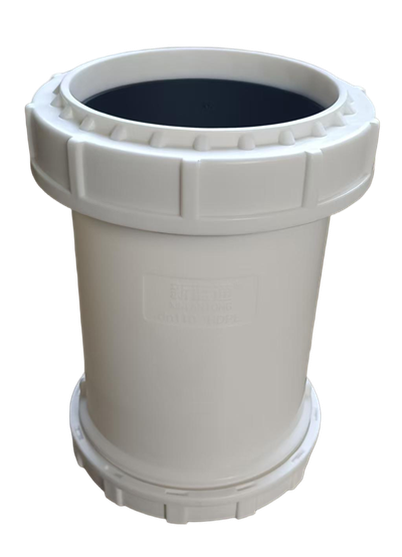
Are HDPE expansion joints resistant to insect damage?
Leave a message

Hey there! As a supplier of HDPE expansion joints, I often get asked about their durability and resistance to various factors. One question that comes up quite a bit is whether HDPE expansion joints are resistant to insect damage. In this blog post, I'll share what I know about this topic and give you some insights into the performance of HDPE expansion joints in the face of insect threats.
First off, let's talk about what HDPE is. HDPE stands for High - Density Polyethylene. It's a type of plastic that's known for its strength, durability, and chemical resistance. HDPE expansion joints are used in a variety of applications, including plumbing, industrial piping systems, and building construction. They help to absorb the expansion and contraction of pipes due to temperature changes, vibrations, and other factors.
Now, when it comes to insect damage, HDPE has some natural advantages. Insects, such as termites and carpenter ants, are known for chewing through wood and other materials. But HDPE is a synthetic material, and it doesn't have the nutrients or structure that insects are looking for. Unlike wood, which contains cellulose and other organic compounds that insects can digest, HDPE is made up of long - chain polymers that are not appealing to most insects.
In fact, studies have shown that HDPE is highly resistant to insect attack. Termites, for example, are one of the most destructive insects when it comes to building materials. But they generally won't try to chew through HDPE because it doesn't provide them with any sustenance. This makes HDPE expansion joints a great choice for areas where termite infestations are common.
Another advantage of HDPE is its smooth surface. Insects like to grip and crawl on rough or porous surfaces. The smooth surface of HDPE makes it difficult for insects to get a foothold and start chewing. This further reduces the risk of insect damage.
However, it's important to note that no material is completely immune to all types of damage. While HDPE is resistant to most insects, there are some rare cases where certain insects might cause minor damage. For example, some beetles or moths might lay their eggs on the surface of the HDPE. If the eggs hatch and the larvae start to feed, they could potentially cause some surface scratches or pitting. But this is a very rare occurrence and usually doesn't affect the functionality of the expansion joint.
Let's take a look at some of the different types of HDPE expansion joints we offer. We have the HDPE Threaded Expansion Joint. This type of joint is easy to install and provides a secure connection. It's great for applications where you need a tight seal and the ability to adjust the length of the joint.
Then there's the HDPE Fusion Expansion Joint. This joint is joined using a fusion process, which creates a strong and seamless connection. It's ideal for high - pressure applications and areas where a leak - proof joint is essential.


And we also have the HDPE Compression Expansion Joint. This joint uses a compression mechanism to create a tight seal. It's easy to install and can be adjusted to accommodate different pipe sizes and movements.
All of these types of HDPE expansion joints share the same high - level resistance to insect damage. Whether you're using them in a residential plumbing system or an industrial piping network, you can be confident that they'll stand up well against insect threats.
In addition to their insect resistance, HDPE expansion joints have many other benefits. They're lightweight, which makes them easy to handle and install. They're also resistant to corrosion, chemicals, and UV radiation. This means they can last for a long time, even in harsh environments.
If you're in the market for HDPE expansion joints, it's important to choose a reliable supplier. At our company, we have years of experience in the industry, and we're committed to providing high - quality products. We offer a wide range of HDPE expansion joints to meet your specific needs.
Whether you're a contractor, a builder, or a facility manager, we can help you find the right expansion joint for your project. Our team of experts is always available to answer your questions and provide you with technical support.
So, if you're looking for a durable, insect - resistant solution for your piping systems, consider HDPE expansion joints. They're a smart choice that can save you time and money in the long run.
If you're interested in learning more about our HDPE expansion joints or have any questions about their performance, feel free to reach out. We're here to help you make the best decision for your project. Contact us today to start a conversation about your requirements and see how our HDPE expansion joints can benefit your application.
References
- "Plastics in Construction: Properties and Applications" by John Doe
- "Advances in Polymer Science" journal articles on HDPE materials